

Acoustic Emission Knowledge
Acoustic Emission Sensors
Brief:Acoustic emission sensors are essential components that convert elastic waves into measurable electrical signals. Their performance depends on factors such as frequency response, sensitivity, and installation quality. By understanding sensor types and para
Acoustic Emission Sensors
- Types, Parameters, and Selection
1、Definition
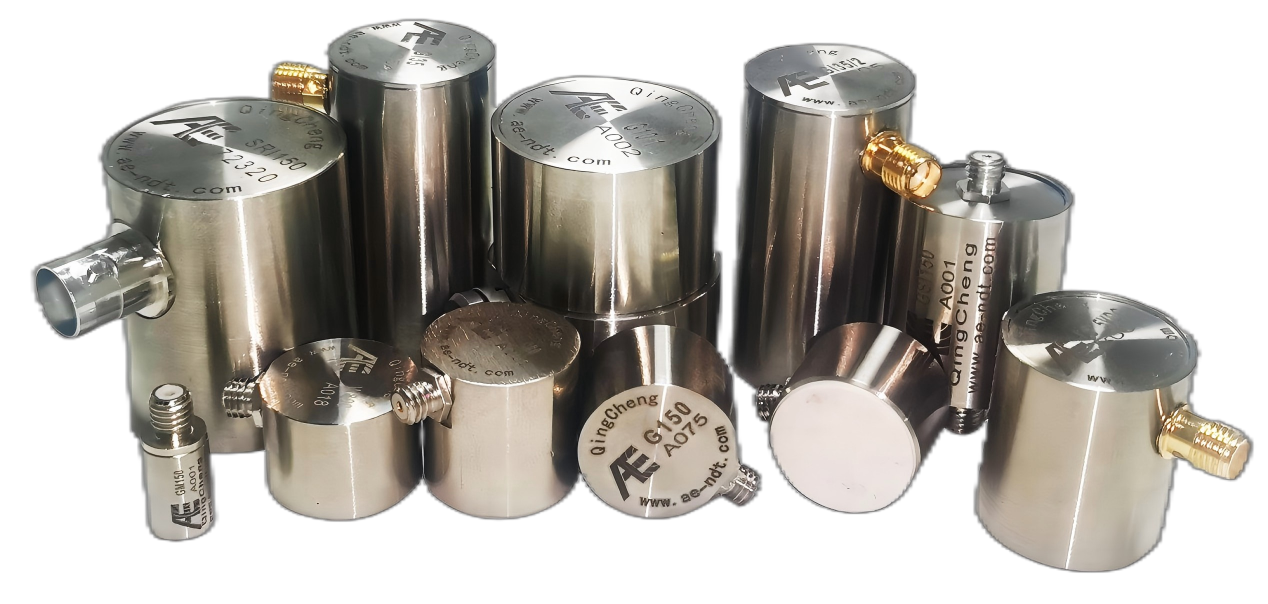
An acoustic emission (AE) sensor is a device that detects surface displacements caused by transient elastic waves generated within a material and converts them into electrical signals for analysis.
AE sensors are a critical component of any acoustic emission monitoring system, as they determine signal quality, frequency response, and detection sensitivity.
2、How Acoustic Emission Sensors Work
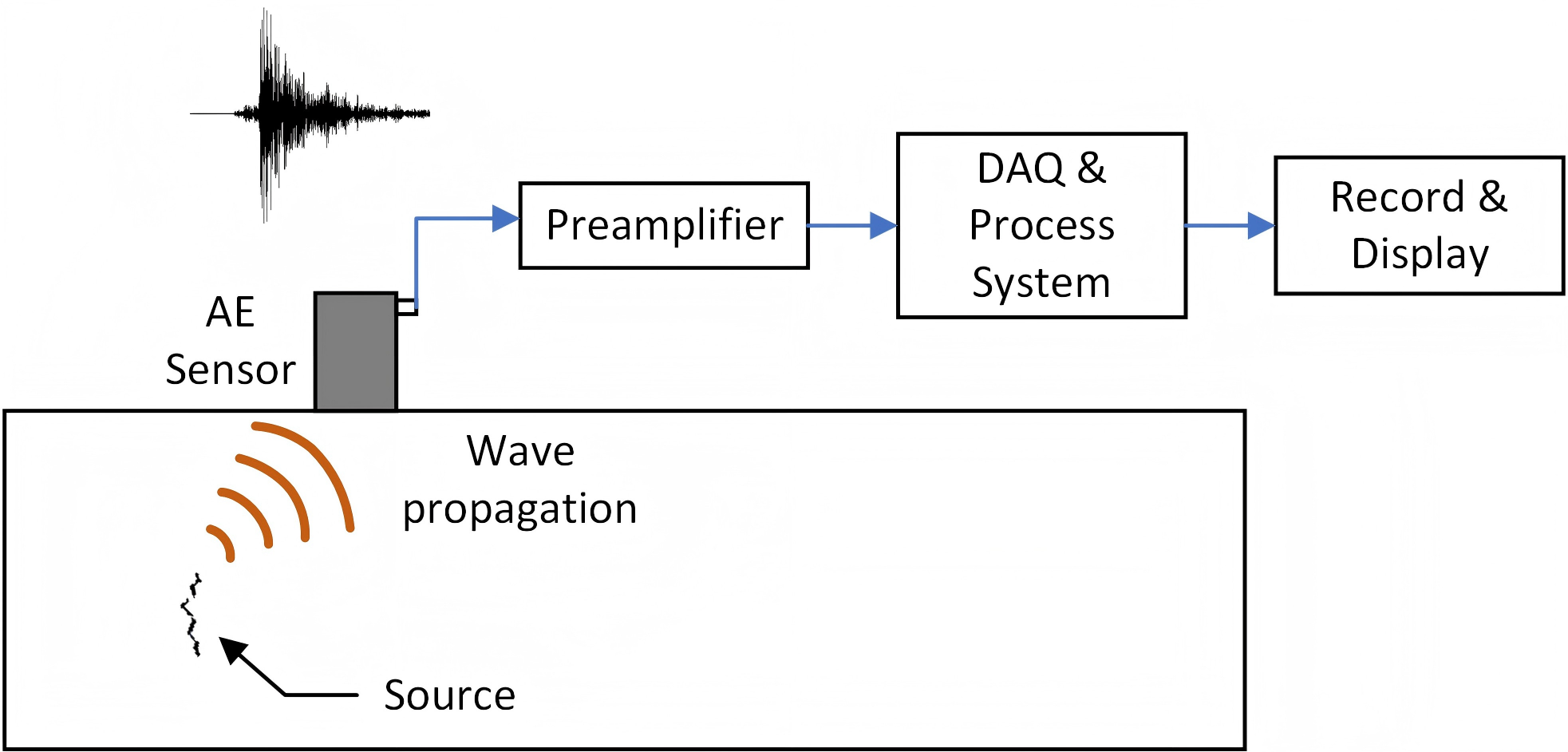
AE sensors are typically based on piezoelectric materials, which generate an electrical signal when subjected to mechanical stress.
Basic Working Principle
1) Acoustic emission waves reach the material surface
2) Surface motion induces stress in the sensor
3) The piezoelectric element converts this stress into voltage
4) The signal is transmitted to a pre-amplifier and acquisition system
Because AE signals are often very weak, proper sensor selection and installation are essential.
3、Types of Acoustic Emission Sensors
AE sensors are generally classified based on their frequency response.
1. Resonant Sensors
Description
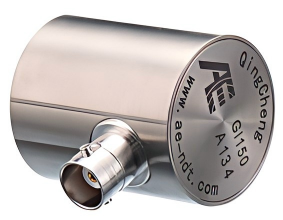
Resonant sensors are designed to have maximum sensitivity around a specific frequency range.
Characteristics
- High sensitivity at resonant frequenc
- Narrow bandwidth
- Lower response outside target range
Advantages
- Excellent for detecting specific signal types
- High signal-to-noise ratio near resonance
Limitations
- Less effective for broadband signal analysis
- May miss signals outside the resonant band
2. Broadband Sensors
Description
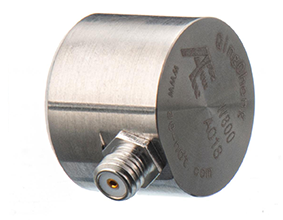
Broadband sensors provide a relatively flat response over a wide frequency range.
Characteristics
- Wide frequency coverage
- Lower peak sensitivity compared to resonant sensors
Advantages
- Suitable for waveform analysis
- Captures a wide range of AE signals
Limitations
- Lower sensitivity for weak signals
- More susceptible to noise
3. Specialty Sensors
In certain applications, specialized sensors are used.
Examples
- High-temperature AE sensors
- Waterproof or subsea sensors
- Miniature sensors for confined spaces
- Intrinsically safe sensors for explosion proof areas
Engineering Relevance
- Required in harsh or constrained environments
- Often involve trade-offs in sensitivity or bandwidth
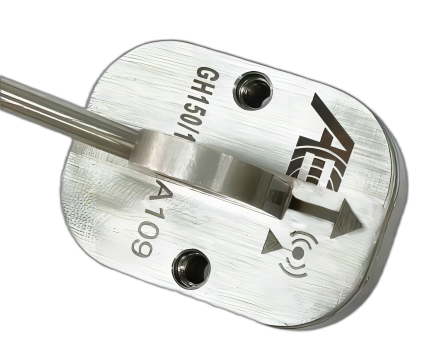
4. Key Parameters of AE Sensors
Understanding sensor parameters is essential for proper selection and system performance.
Frequency Range
Defines the range of frequencies the sensor can detect effectively.
- Typical AE range: 20 kHz – 1 MHz
- Selection depends on material and application
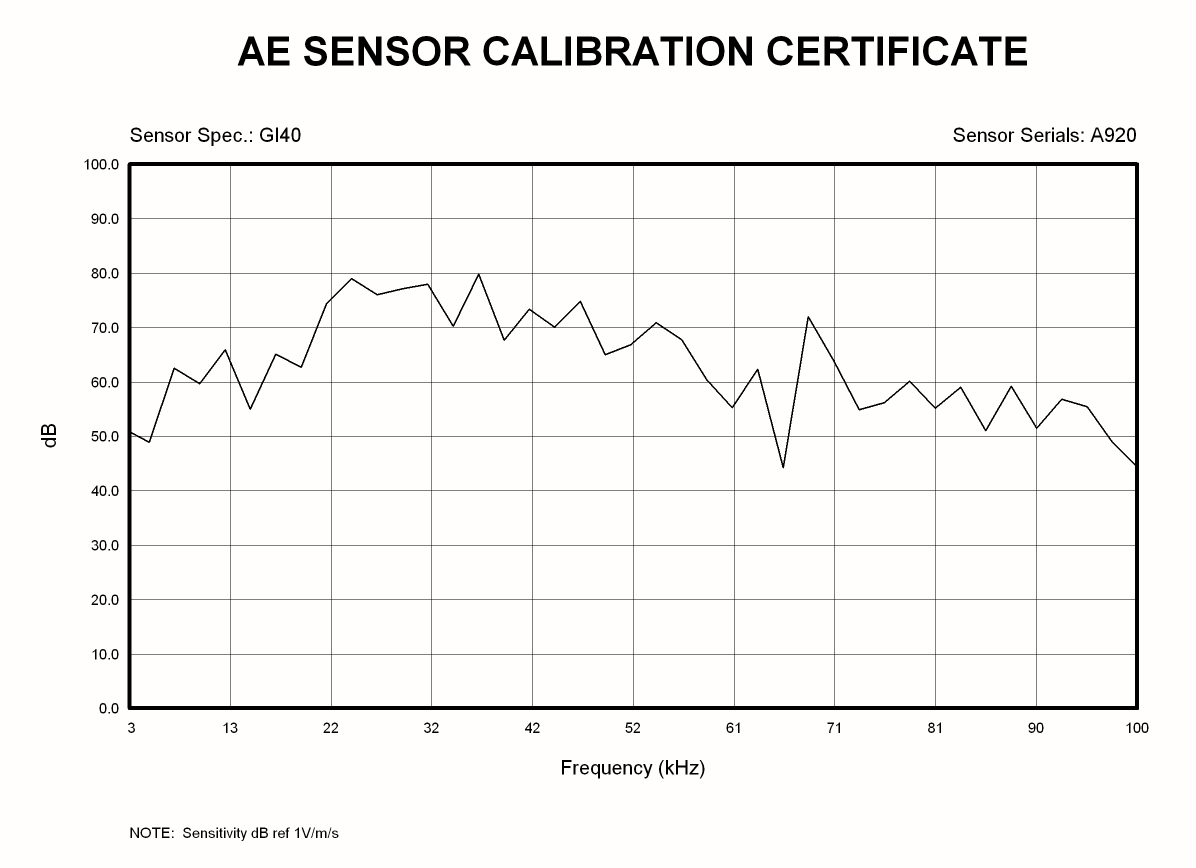
Sensitivity
Indicates how effectively the sensor converts mechanical waves into electrical signals.
- Higher sensitivity → better detection of weak signals
- Excessive sensitivity → increased noise pickup
Dynamic Range
The range between the smallest and largest signals the sensor can measure.
- Important for capturing both weak and strong events
- Influences data quality in mixed-signal environments
Directionality
Describes how sensor response varies with wave direction.
- Most AE sensors are approximately omnidirectional
- Installation affects effective directionality
Operating Temperature
Defines the environmental limits of the sensor.
- Standard sensors: typically up to ~80–120°C
- Specialized sensors required for higher temperatures
5. Sensor Selection Guidelines
Selecting the right AE sensor depends on the application requirements.
Consider the Following Factors
1) Application Type
- Crack detection → resonant sensors
- General monitoring → broadband sensors
2) Material Properties
Indicates how effectively the sensor converts mechanical waves into electrical signals.
- Higher sensitivity → better detection of weak signals
- Excessive sensitivity → increased noise pickup
3) Expected Signal Type
- Burst signals → resonant sensors
- Continuous signals → broadband sensors
4) Environment
- High temperature → specialized sensors
- Underwater → sealed sensors
5) Noise Conditions
- High noise → narrowband (resonant) preferred
- Low noise → broadband feasible
6. Sensor Installation and Coupling
Even the best sensor performs poorly if installed incorrectly.
Coupling
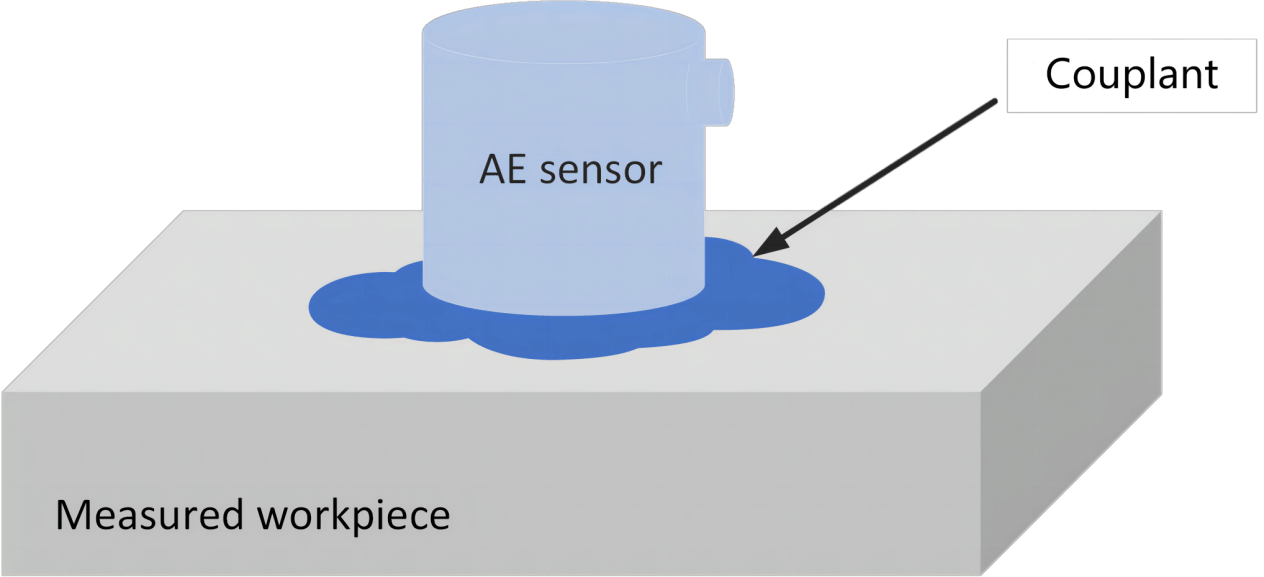
Coupling ensures efficient transmission of acoustic waves from the structure to the sensor.
Common coupling materials:(couplant)
- grease
- silicone
- adhesive
Poor coupling results in:
- signal attenuation
- reduced sensitivity
Mounting Methods
- Magnetic holders (temporary)
- Adhesive bonding (permanent)
- Mechanical fixtures
Placement Considerations
- Avoid areas with high noise
- Ensure adequate coverage
- Consider wave attenuation over distance
7. Common Challenges in AE Sensing
Signal Attenuation
- Signals weaken as they travel through materials
Environmental Effects
- Temperature and humidity affect performance
Noise Interference
- Mechanical and electrical noise may mask signals
Sensor Variability
- Different sensors respond differently to the same signal
8. Role of Sensors in AE System Performance
AE sensors directly influence:
- Detection capability
- Signal quality
- Accuracy of source localization
- Reliability of monitoring results
In many cases, sensor selection is the most critical factor in system design.
Frequently Asked Questions
1) What is the best AE sensor type?
There is no universal “best” sensor. The choice depends on application, material, and monitoring objectives.
2) Can one sensor cover all applications?
No. Different applications require different frequency ranges and sensitivities.
3) How important is coupling?
Coupling is critical. Poor coupling can significantly reduce signal quality, regardless of sensor type.
4) Do AE sensors require calibration?
Yes. Calibration ensures consistent and reliable measurements across systems.
Related Topics
- Acoustic Emission Basics
- AE Signal Processing and Analysis
- Sensor Coupling and Installation
- Resonant vs Broadband Sensors
Summary
Acoustic emission sensors are essential components that convert elastic waves into measurable electrical signals. Their performance depends on factors such as frequency response, sensitivity, and installation quality. By understanding sensor types and parameters, engineers can select appropriate sensors for specific applications and ensure reliable acoustic emission monitoring.