
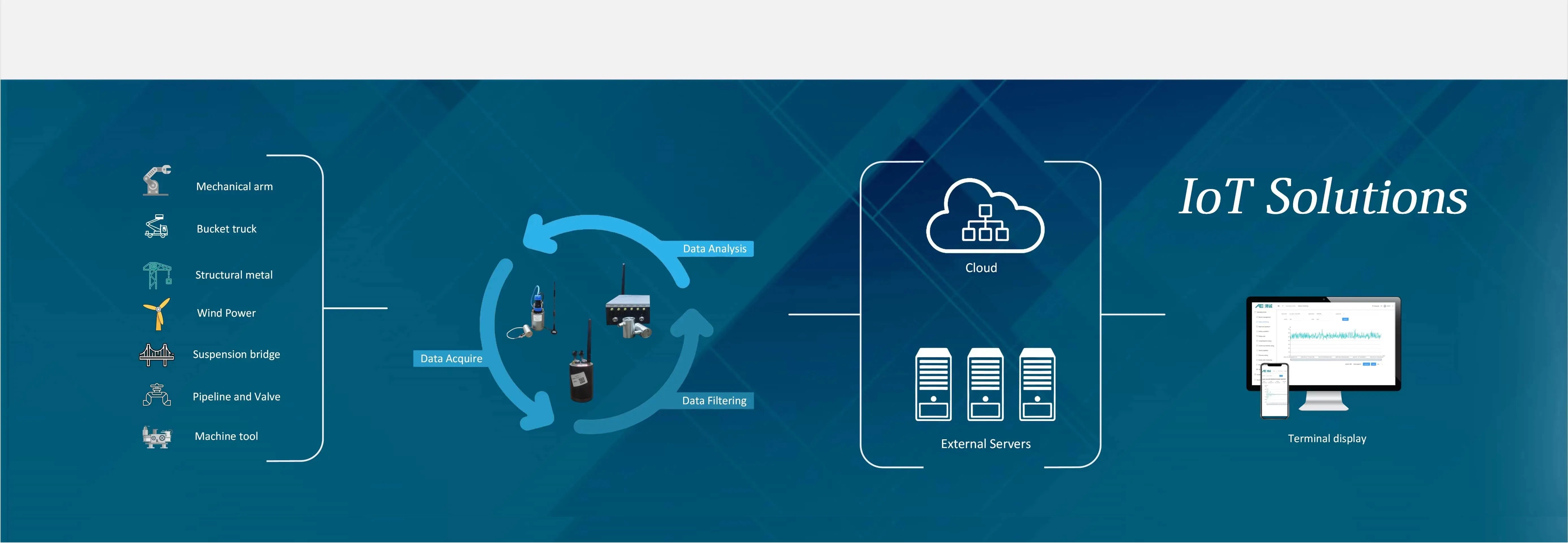
Rotating Machinery Condition Monitoring with Acoustic Emission
Detect Bearing and Mechanical Faults at an Earlier Stage
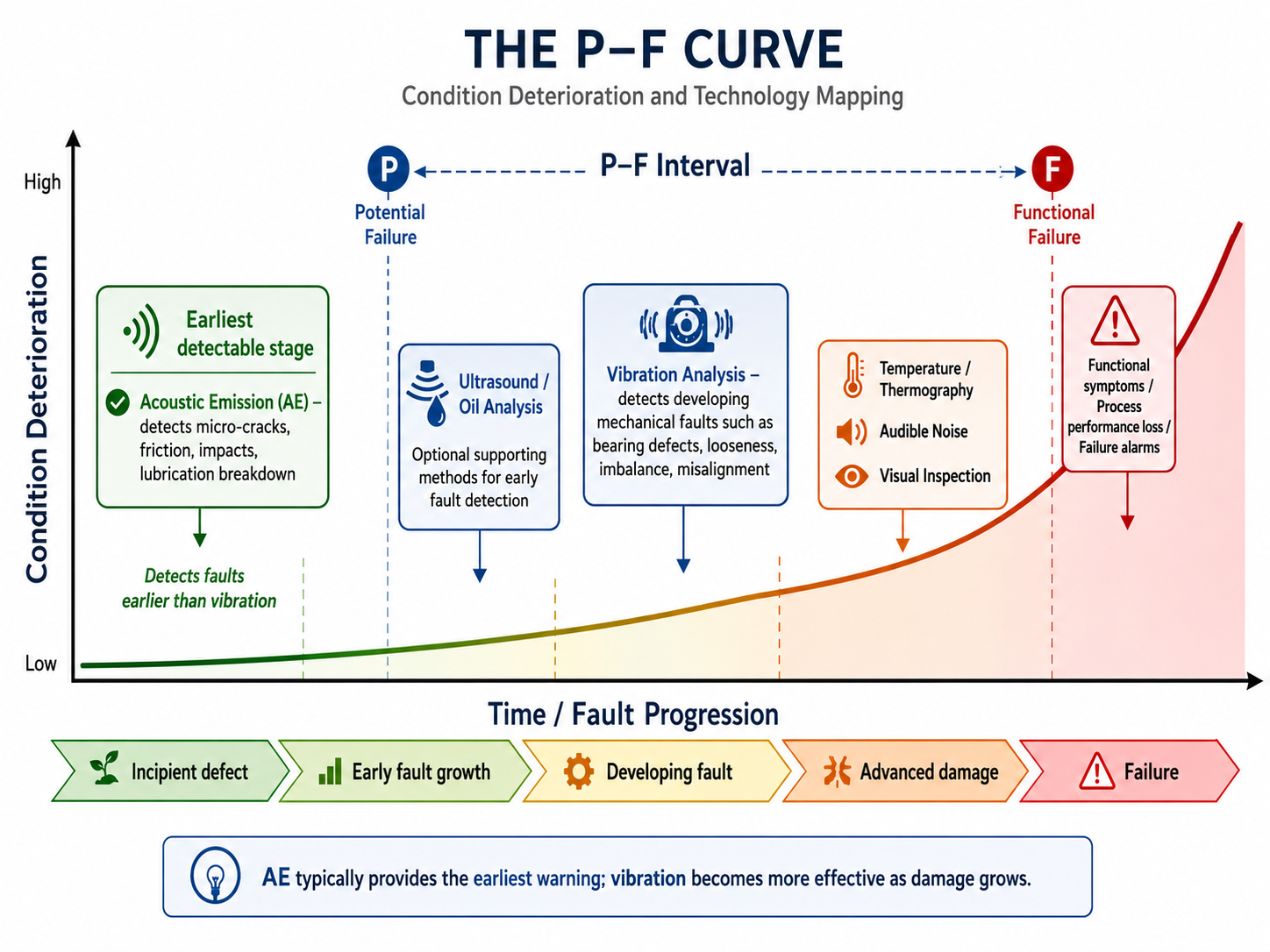
Bearing wear, poor lubrication, surface damage and friction can begin long before a machine shows obvious vibration, temperature rise or performance degradation.
Acoustic Emission (AE) monitoring detects high-frequency elastic waves generated by microscopic friction, impacts, wear and material damage inside operating machinery.
Because these signals can appear during the early stages of degradation, AE provides maintenance teams with an additional early-warning tool for identifying developing mechanical problems — particularly in bearings and low-speed rotating machinery.
-
 Detect earlier
-
 Trend continuously
-
 Maintain before failure
- Why Acoustic Emission?
- Faults & Applications
- Monitoring System
- Analysis, Cases & FAQ
Detect Mechanical Problems Before They Become Major Faults
Bearings and other rotating components normally do not fail suddenly. Mechanical faults from normal operations develop progressively. Early lubrication or friction changes can lead to surface damage, followed by a developed fault, increasing vibration and temperature, and ultimately equipment failure.
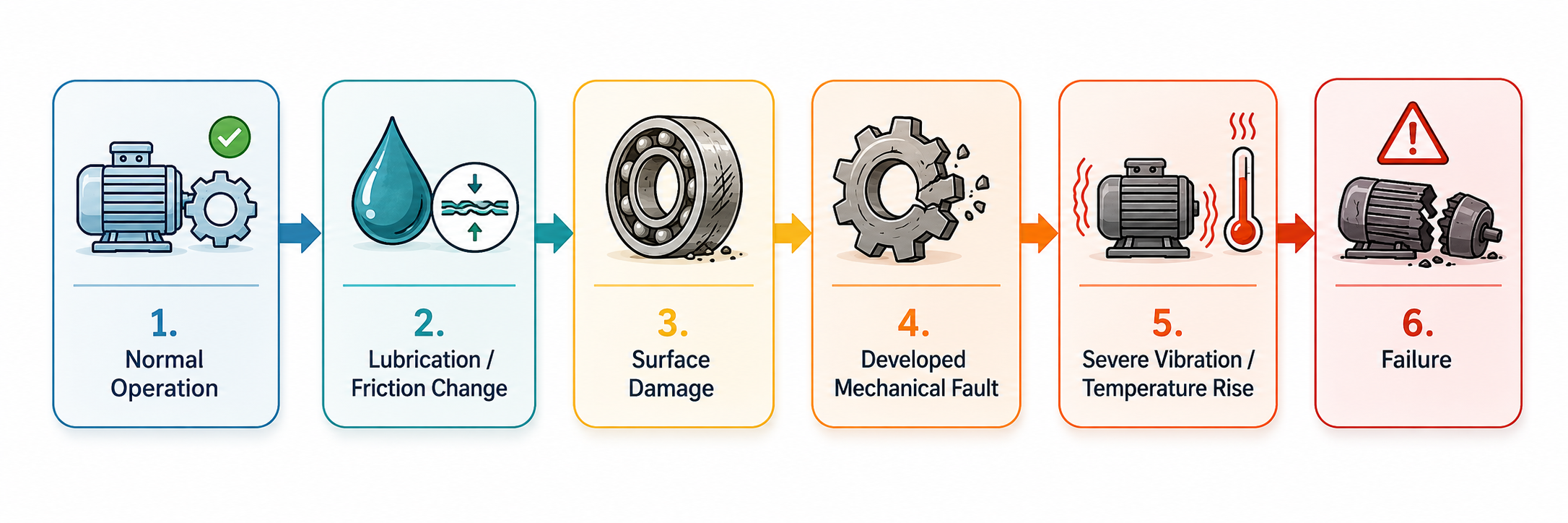
During the early stages, microscopic friction, rubbing, pitting and small impacts can already generate high-frequency elastic waves. These signals can be detected by acoustic emission (AE) sensors mounted on the machine structure.
This allows AE monitoring to identify developing mechanical activity before the fault becomes severe.
Why Acoustic Emission Is Sensitive to Early Damage
When two surfaces interact inside a bearing, gearbox or other mechanical component, energy is released through microscopic:
- friction;
- rubbing;
- impacts;
- pitting;
- crack activity;
- surface deformation;
- material damage.
These events generate high-frequency stress waves that propagate through the machine structure.
An AE sensor converts these waves into electrical signals that can be measured, trended and analyzed.
Acoustic Emission vs. Vibration Monitoring
Different Technologies See Different Stages of Machine Degradation
Vibration analysis is one of the most established methods for rotating machinery condition monitoring.
It is highly effective for diagnosing:
- imbalance;
- misalignment;
- looseness;
- shaft problems;
- resonance;
- developed bearing faults;
- gear mesh problems.
Acoustic emission monitors a different physical phenomenon.
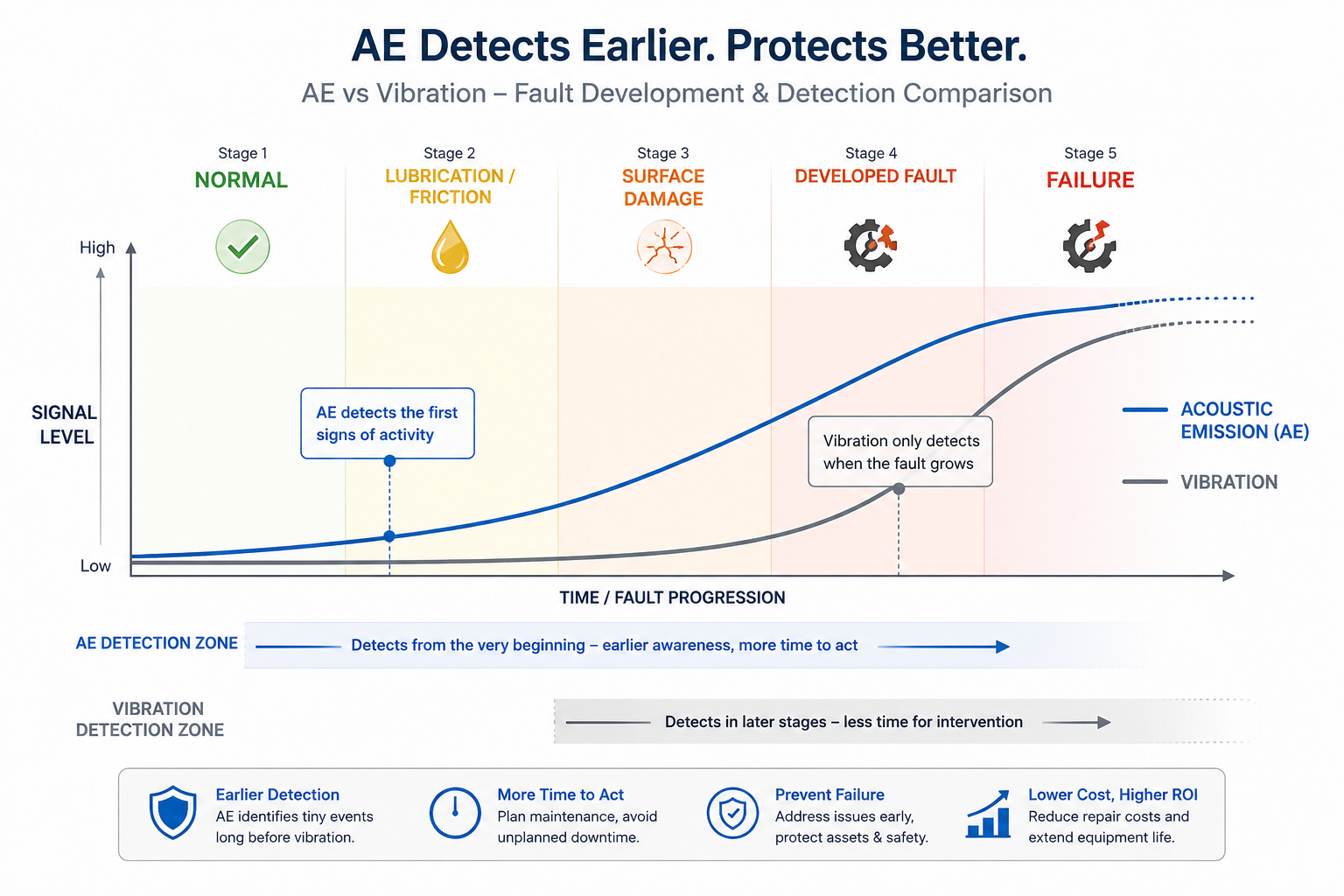
AE is especially sensitive to high-frequency energy produced by microscopic friction, contact and localized damage.
For this reason, AE can reveal many incipient bearing and friction-related faults before they produce strong conventional vibration signatures.
Typical Fault Development
| Fault Stage | Acoustic Emission | Vibration |
| Normal operation | Baseline | Baseline |
| Lubrication deterioration | High sensitivity | Often limited change |
| Increased friction | High sensitivity | May still be weak |
| Early surface damage | Strong diagnostic value | Beginning to develop |
| Developed bearing fault | Detectable | Strong diagnostic value |
| Severe mechanical fault | Strong | Strong |
AE Does Not Replace Vibration
Acoustic emission and vibration monitoring are complementary technologies.
AE is particularly valuable for detecting early friction, lubrication and localized surface damage.
Vibration analysis remains highly effective for machine dynamics and developed mechanical faults.
For critical machinery, combining both technologies can provide broader coverage across the complete fault-development process.
Especially Valuable for Low-Speed Machinery
Low-speed bearings are one of the strongest applications for acoustic emission monitoring.
When rotational speed decreases, vibration energy associated with a localized bearing defect can become very weak.
However, each contact between a rolling element and a damaged surface may still produce a short-duration high-frequency acoustic emission signal.
AE can therefore be effective for monitoring:
- slow-speed bearings;
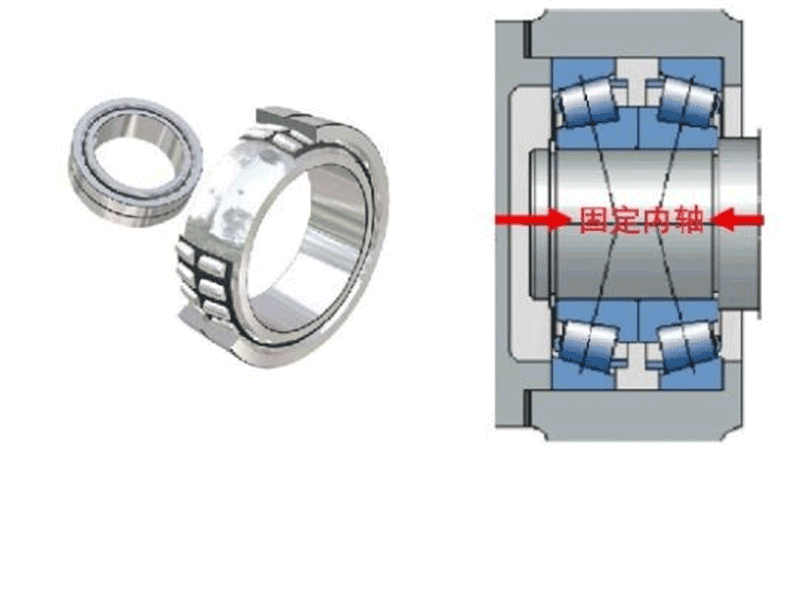
- large industrial bearings;
- slew bearings;
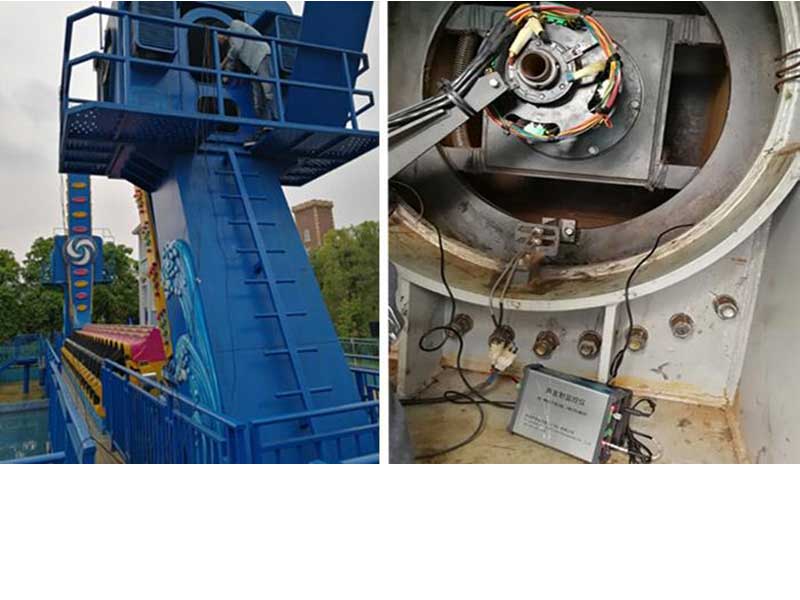
- wind turbine bearings;
- conveyors;
- paper machinery;
- heavy-duty gearboxes;
- large rotating structures.
Key Benefits of AE Monitoring
 Earlier Fault Indication |
 Effective at Low Speed |
 Continuous Condition Trending |
 Remote Monitoring |
 Detailed Signal Analysis |
| Detect friction, lubrication changes and localized surface damage during early fault development. | Monitor machines where conventional vibration signals may be weak. | Track how the machine condition develops over days, weeks or months | Combine AE sensors with standalone monitoring systems and cloud-based data access. | Go beyond a simple alarm using waveform, FFT, RMS, energy and other AE parameters. |
What Can Acoustic Emission Monitor?
AE monitoring helps detect friction, wear, lubrication problems, impact events and other abnormal mechanical activity in rotating machinery.
Bearing Damage
Detect localized defects on bearing races, rolling elements and cages through repeated high-frequency impacts generated during rotation.
Lubrication Problems
Identify increased friction and abnormal contact caused by insufficient, deteriorated or contaminated lubrication — often before severe mechanical damage develops.
Wear & Surface Damage
Monitor pitting, scoring, spalling and progressive surface deterioration through changes in acoustic emission activity over time.
Gearbox Faults
Detect abnormal high-frequency activity associated with gear wear, pitting, impacts, lubrication problems, bearing faults and crack-related events.
Transient Mechanical Events
Capture short-duration events such as sudden impacts, intermittent rubbing, crack propagation and localized material failure.
Condition Trending
Typical AE parameters include RMS, amplitude, ASL, energy, event rate, waveform characteristics and frequency content. Trending these parameters against a healthy baseline helps determine whether machine condition is:
Stable → Developing → Critical
Typical Rotating Machinery Applications
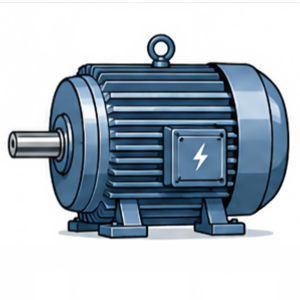
Electric Motors
Bearing friction, wear & developing faults
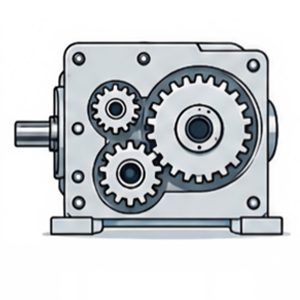
Gearbox
Gear contact, surface damage & lubrication issues
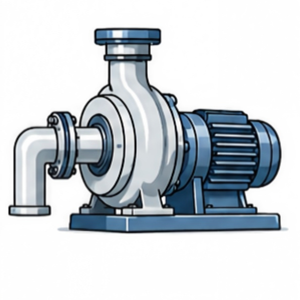
Pumps
Bearing & mechanical condition monitoring
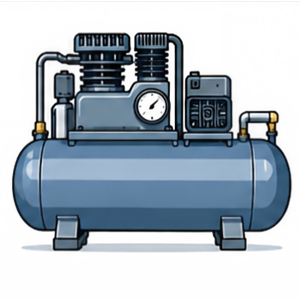
Compressors
Bearing activity & mechanical deterioration
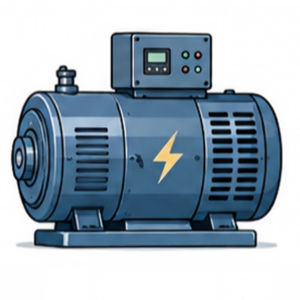
Generators
Bearings & rotating structure monitoring

Wind Turbines
Main, gearbox, yaw & slow-speed bearings
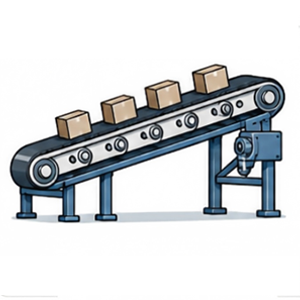
Conveyors
Slow-speed bearings & rollers
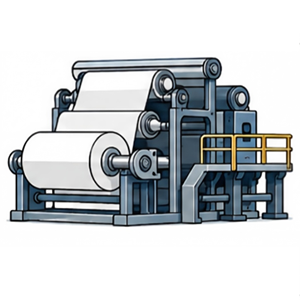
Paper Machinery
Large, very low-speed rotating machinery
Sensor Selection for Rotating Machinery
The most suitable AE sensor depends on:
- machine speed;
- bearing size;
- machine structure;
- expected fault mechanism;
- monitoring distance;
- acoustic attenuation;
- background noise;
- installation location.
Different applications may require different frequency ranges.
For many friction and bearing monitoring applications, lower-frequency AE sensors can provide useful sensitivity and propagation characteristics.
Higher-frequency AE sensors may be preferable when the objective is detailed transient event analysis.
Sensor Installation
Correct sensor installation has a major influence on monitoring quality.
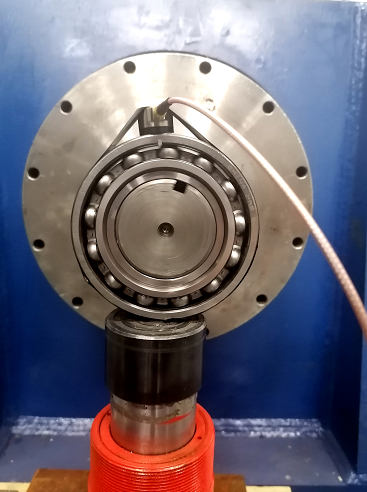
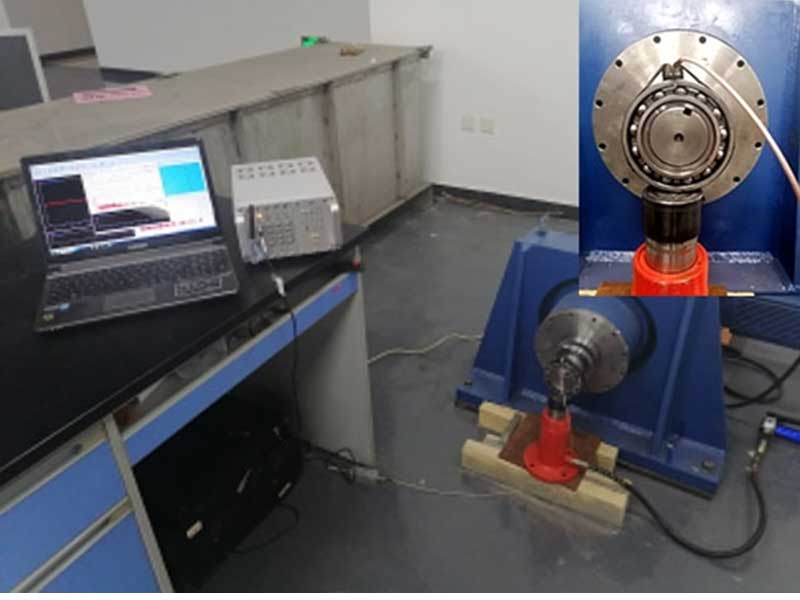
The sensor should normally be mounted on a stationary structural surface with a good acoustic transmission path to the monitored component.
For bearing monitoring, the bearing housing is often an appropriate location.
Recommended Installation Principles
- Keep the acoustic path as short as practical.
- Avoid unnecessary joints and structural interfaces.
- Install on a clean and rigid surface.
- Use suitable acoustic coupling.
- Keep the sensor position consistent for trend comparison.
- Compare measurements under similar machine speed and load.
For large equipment, multiple sensors may be installed around different bearings or structural regions.
How the Acoustic Emission Monitoring System Works
A simplified acoustic emission condition monitoring workflow for bearings and rotating machinery
① Detect
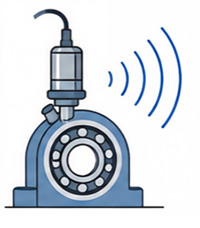
AE sensor detects high-frequency elastic waves from friction, impacts and damage.
⇨
② Acquire
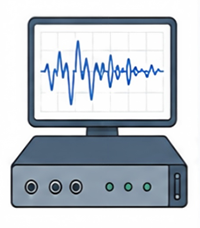
System acquires parameters and, when needed, full waveforms.
Modes: continuous, scheduled, interval-based, threshold-triggered.
⇨
③ Process
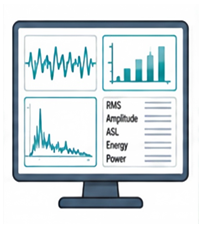
Calculates RMS,amplitude, ASL,energy, power,waveform andfrequency features.
⇨
④ Trend
Compares current data with history,baseline, operating conditions and alarm thresholds.
⇨
⑤ Diagnose
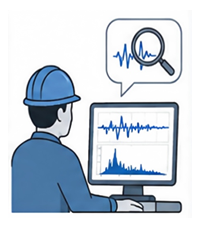
Engineers review trends, waveforms and frequency changes to identify abnormal activity.
⇨
⑥ Respond

Inspect, lubricate,repair or replace the component before failure.
Trend the Machine — Not Just a Single Number
There is no universal AE value that represents a healthy bearing for every machine.
Different machines have different:
- structures;
- speeds;
- loads;
- bearing types;
- lubrication;
- mounting conditions;
- background noise.
For this reason, AE monitoring is most effective when a healthy baseline is established.
Recommended Monitoring Logic
Healthy Baseline
⇨
Regular AE Measurement
⇨
Compare Similar Operating Conditions
⇨
Detect Abnormal Trend
⇨
Review Signal Characteristics
⇨
Generate Maintenance Warning
The trend is often more meaningful than one isolated measurement.
Recommended Systems
1) RAEM2 - Wireless Low-Power Machinery Monitoring
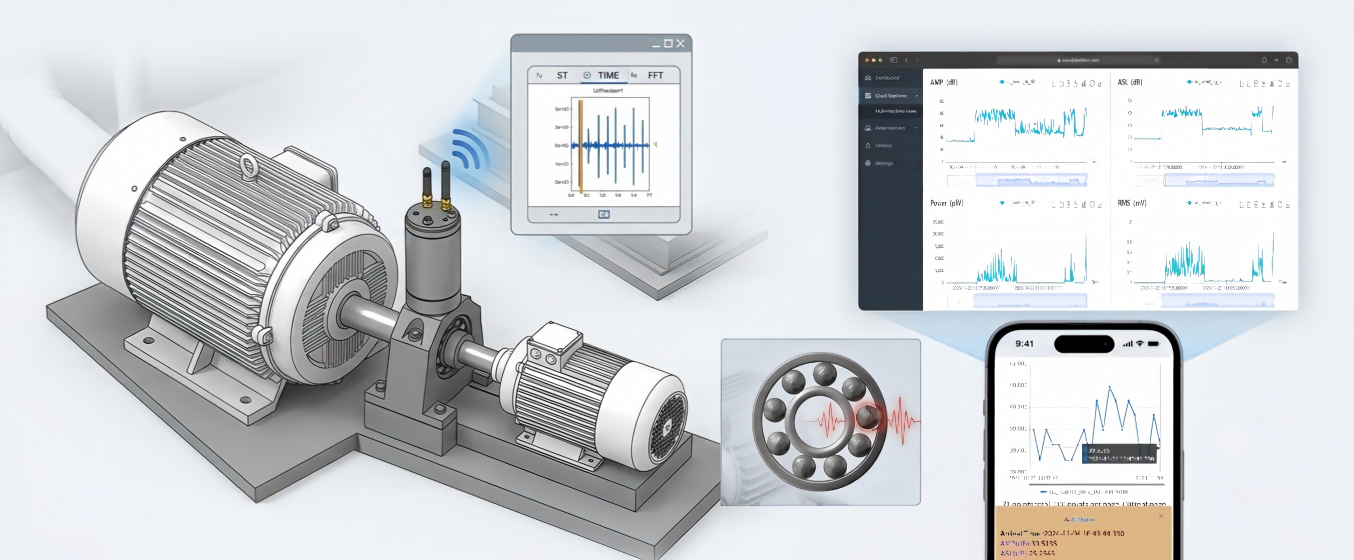
RAEM2 integrates acoustic emission sensing, data acquisition, processing, battery power and wireless communication in a compact monitoring unit.
Depending on configuration, it supports:
- periodic (interval) acquisition;
- Amplitude/RMS/ASL/Power monitoring;
- waveform acquisition;
- 4G/LoRa communication;
- Bluetooth inspection;
- remote cloud monitoring.
Typical Applications
Bearing Monitoring | Lubrication Monitoring | Low-Speed Machinery | Distributed Assets
2) RAEM1 - Real-Time Single-Channel AE Monitoring
Best suited for applications requiring:
- continuous monitoring;
- threshold triggering;
- real-time acquisition;
- transient event detection;
- remote unattended monitoring.
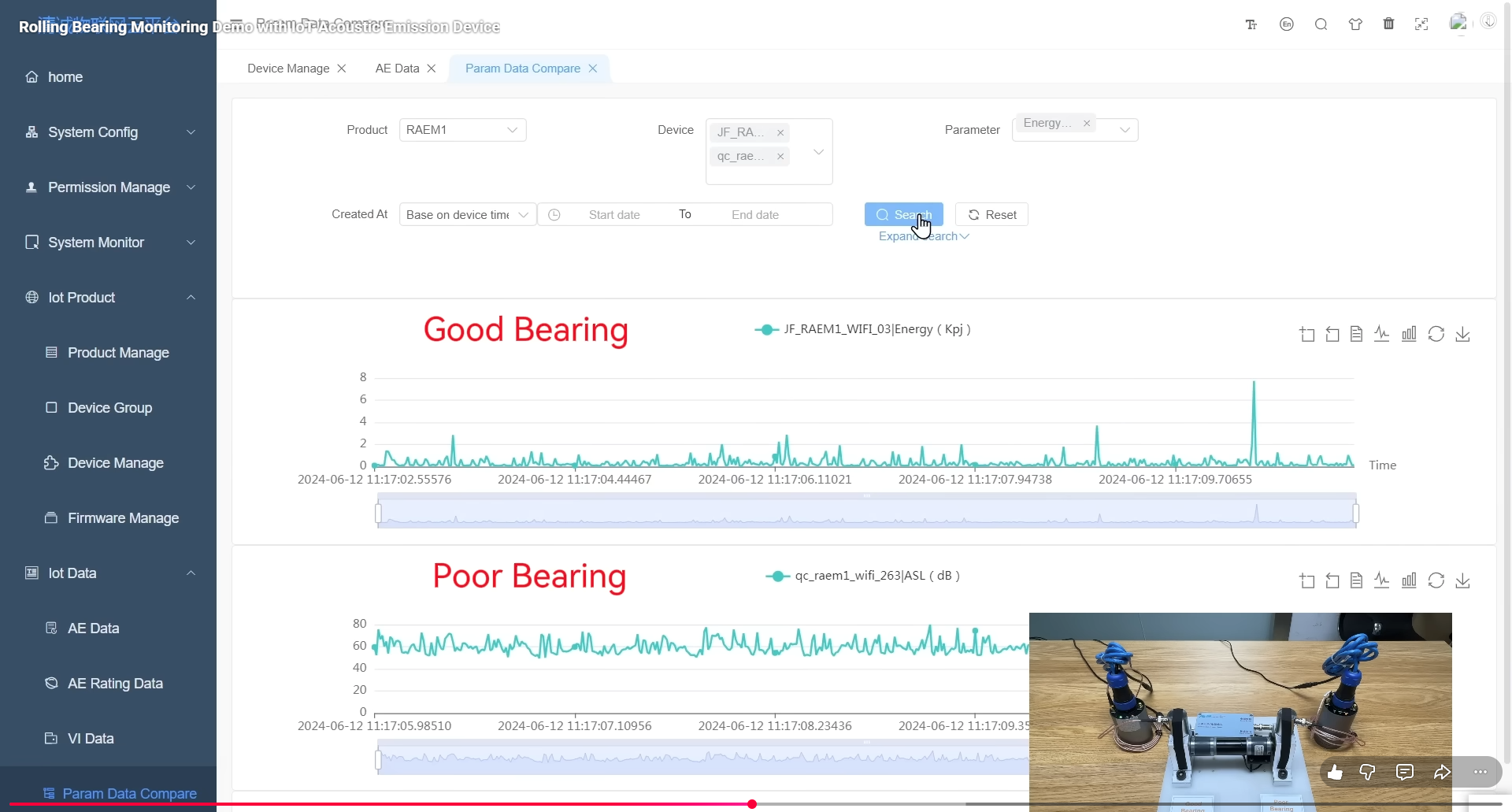
RAEM1 is a full-function single-channel acoustic emission monitoring system that can capture both AE parameters and waveform data.
Typical Applications
Critical Bearings | Wear | Crack Activity | Transient Faults | Continuous Monitoring
3) RAEM1-6 - Multi-Channel AE Detection and Monitoring
Best suited for:
- large rotating machinery;
- multiple bearings;
- synchronized measurement;
- temporary diagnostic testing;
- long-term monitoring;
- detailed waveform analysis.
RAEM1-6 provides six synchronized acoustic emission channels in one system. Multiple units can be combined when more monitoring points are required.
It can be used both as an:
- AE Testing System (for detailed inspection and engineering diagnosis)
- Online AE Monitoring System (for continuous or long-term condition monitoring)
Typical Applications
Large Gearboxes | Large Bearings | Multi-Point Monitoring | Fault Localization | Engineering Diagnosis
Which System Should I Choose?
| Monitoring Requirement | Recommended System |
| Wireless periodic bearing monitoring | RAEM2 |
| Low-power distributed monitoring | RAEM2 |
| Lubrication trend monitoring | RAEM2 |
| Single-point continuous monitoring | RAEM1 |
| Transient AE event detection | RAEM1 |
| Multi-bearing synchronized monitoring | RAEM1-6 |
| Detailed waveform analysis | RAEM1-6 |
| Temporary AE diagnostic testing | RAEM1-6 |
| Permanent multi-channel monitoring | RAEM1-6 |
Need Help Choosing?
Send us:
- machine type;
- rotational speed;
- bearing model or size;
- number of monitoring points;
- monitoring objective;
- available power;
- communication requirements.
We can recommend a suitable sensor frequency, AE system and acquisition strategy.
From Condition Trending to Detailed Fault Analysis
Acoustic emission monitoring can be applied at different levels depending on the maintenance objective.
Level 1 — Condition Trending
For routine predictive maintenance, simple trend parameters may already provide useful information.
Common parameters include:
RMS | ASL | Amplitude | Energy | Power
An increase from the normal baseline can indicate a change in friction or mechanical condition.
Level 2 — Alarm Classification
Based on historical data, machine-specific condition levels can be established.
Normal
Signal remains close to the healthy baseline.
Attention
AE activity begins to increase.
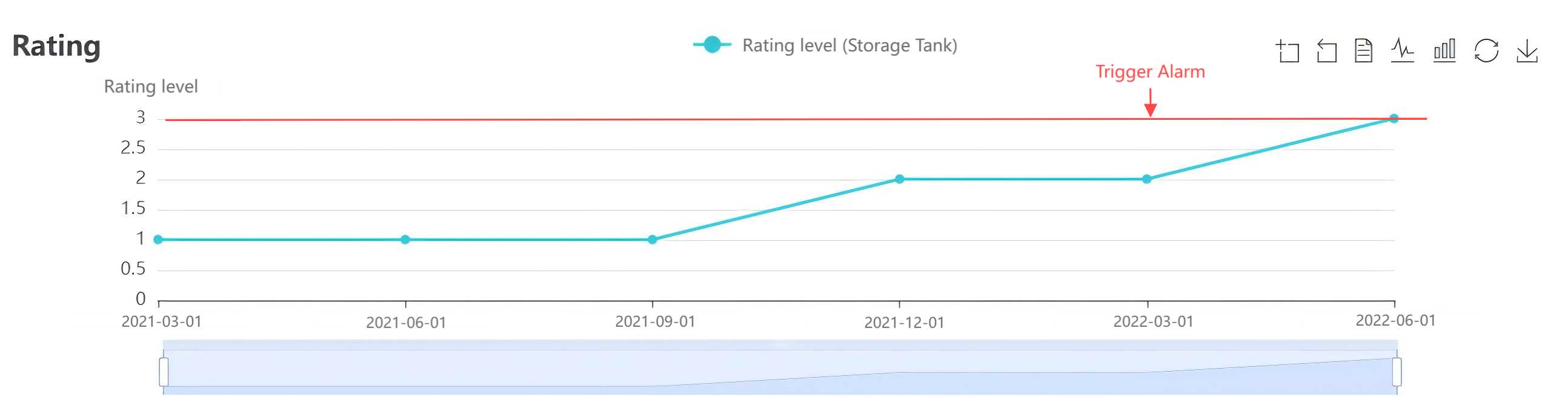
Warning
Persistent abnormal activity suggests developing friction, lubrication or mechanical damage.
Alarm
Strong or rapidly increasing AE activity requires inspection.
Alarm thresholds should be established according to the actual machine rather than using one universal value.
Level 3 — Waveform and Frequency Analysis
When abnormal trends are detected, engineers can investigate the signal in more detail.
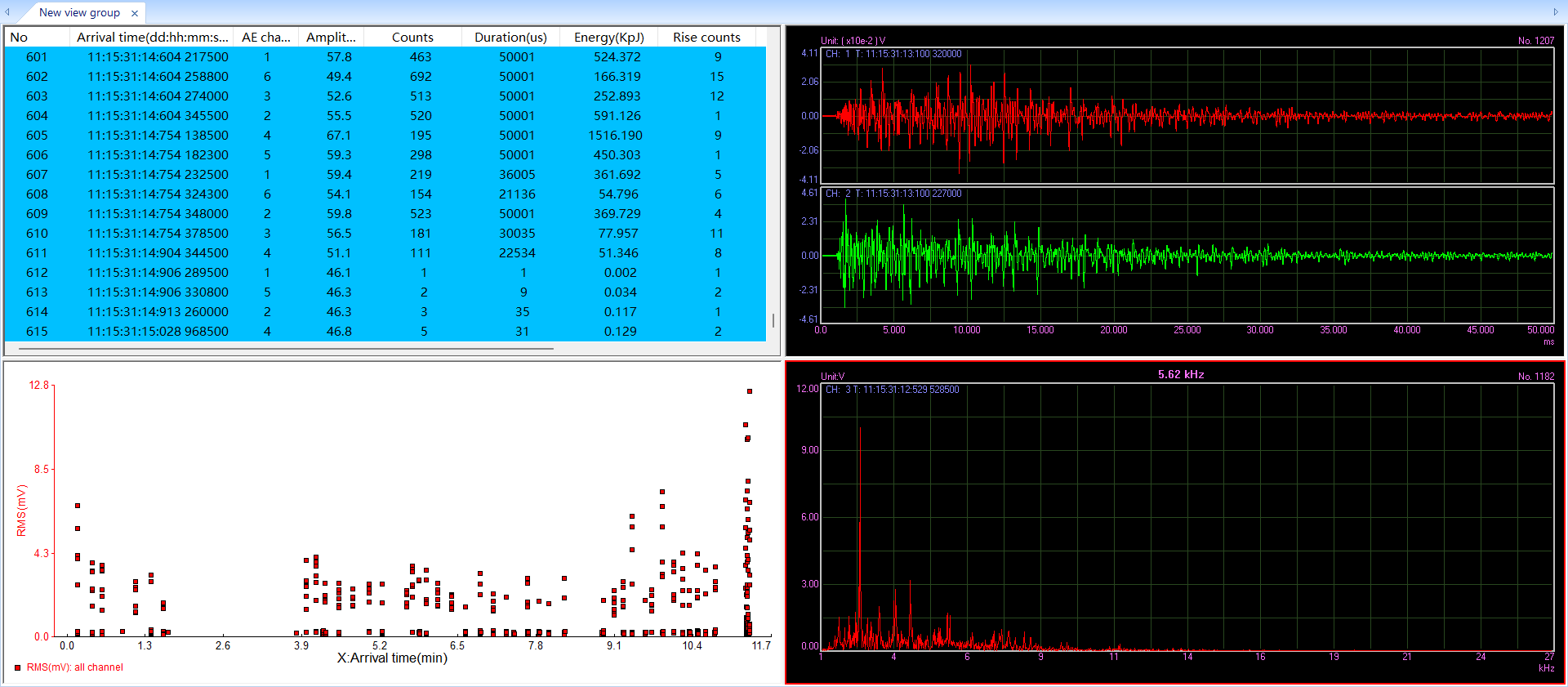
SWAE software can support analysis including:
- AE parameter analysis;
- waveform analysis;
- frequency analysis (FFT);
- digital filtering;
- wavelet analysis;
- correlation analysis;
- multi-channel comparison.
This allows AE to function not only as an alarm method, but also as an engineering diagnostic tool.

Frequently Asked Questions (FAQ)
Q1: Can acoustic emission detect bearing faults earlier than vibration?
In many bearing applications, yes. Acoustic emission is sensitive to high-frequency elastic waves produced by microscopic friction, impacts and surface damage. These mechanisms can begin before the defect produces a strong conventional vibration response. The actual detection advantage depends on machine speed, load, fault type, sensor installation and background noise, so AE should be considered a complementary condition monitoring technology rather than a universal replacement for vibration analysis.
Q2: Is acoustic emission suitable for low-speed bearings?
Yes. Low-speed bearings are an important AE application because conventional vibration signals can become weak as rotational speed decreases. Localized contact and impacts at a bearing defect can still generate high-frequency acoustic emission signals, making AE useful for monitoring slow and very slow rotating equipment.
Q3: What bearing faults can AE monitoring detect?
Depending on the machine and monitoring configuration, AE can help identify changes associated with poor lubrication, increased friction, wear, pitting, spalling, rolling-element damage, raceway damage and crack-related activity.
Q4: Can AE detect lubrication problems?
AE is sensitive to friction between interacting surfaces. Changes in lubrication condition can therefore produce measurable changes in RMS, energy, ASL and other AE characteristics. Trending these parameters against a healthy baseline can help identify developing lubrication problems.
Q5: Where should the AE sensor be installed?
For bearing condition monitoring, the sensor is generally installed on a stationary bearing housing or another rigid structural surface with a good acoustic transmission path to the monitored component. The exact position should be determined according to the machine structure and monitoring objective.
Q6: Do I need a baseline measurement?
A baseline is strongly recommended. Machines have different speeds, loads, structures and normal acoustic characteristics, so trending changes relative to a known healthy condition is usually more reliable than applying one universal alarm value.
Q7: Can acoustic emission replace vibration monitoring?
Not in every application. Vibration analysis is very effective for imbalance, misalignment, looseness and many developed mechanical faults. AE is particularly valuable for early friction, lubrication and localized damage activity. For critical machinery, using the two technologies together can provide broader coverage of the failure progression.
FINAL CTA
Need to Monitor Bearings, Gearboxes or Low-Speed Machinery?
Tell us the machine type, speed, bearing information and the fault you want to detect.
QAWRUMS can help you select the AE sensor, acquisition system and monitoring strategy for your application.
Contact Form
Please complete the form below to request your quote. We will be in contact as soon as possible.